
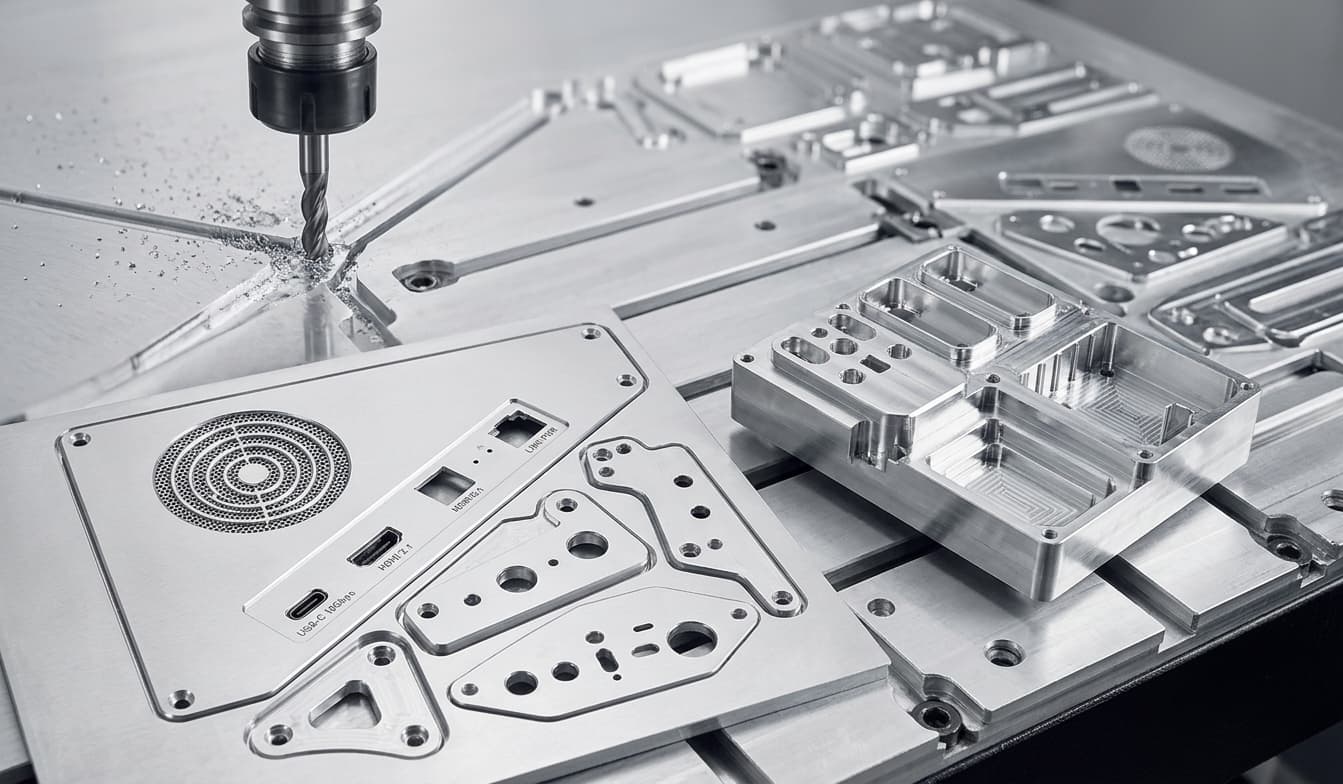
HEXA for Aluminium Machining – An Interview with Marc Canudas
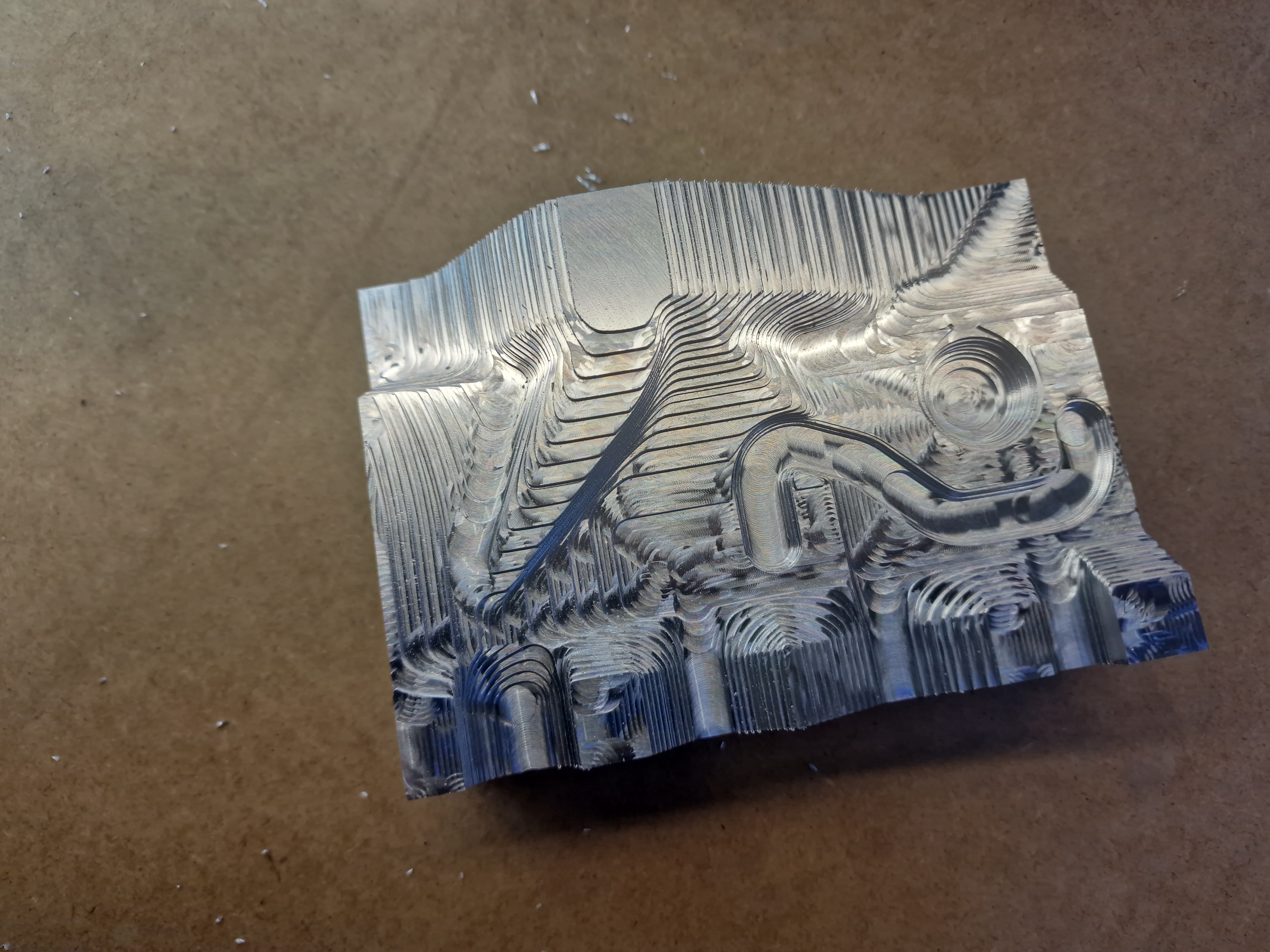
High-Precision, High-Speed Aluminium Machining: An Interview with Marc Canudas on BERMAQ's HEXA Technology
Aluminium is one of the most widely used materials in today's industry. Its light weight, strength and versatility make it essential in sectors such as aerospace, automotive, technology and industrial component manufacturing. But what does it take to machine aluminium with maximum precision and efficiency?
We speak with Mr Marc Canudas, engineer and CEO of BERMAQ, to explore the challenges of aluminium machining, the demands of today's industrial processes and the capabilities of the HEXA machine in meeting these challenges.
Marc, to start with, why is aluminium such an interesting material for today's industry?
Aluminium has a range of properties that make it particularly attractive for a wide variety of industrial applications. It is lightweight, offers a good strength-to-weight ratio, has high thermal conductivity and is extremely versatile in terms of its applications.
This explains why it is so widely used in sectors such as aerospace, automotive, marine, electronics and machinery manufacturing.
It also makes it possible to manufacture components with a wide range of geometries, from panels and profiles to three-dimensional parts requiring a very high level of detail and precision.
However, to translate all these properties into excellent production results, having the right machining technology is essential.
What are the main challenges when machining aluminium?
One of the most important aspects is achieving the right balance between speed, precision and surface finish.
Aluminium is a material that can be machined at high speeds, but this does not mean that every machine can deliver good results. Several factors need to be considered: structural rigidity, spindle stability, the tools being used, chip evacuation and proper workpiece clamping.
It is also important to prevent vibrations, particularly when machining large workpieces, thin-walled parts or complex geometries.
Therefore, it is not simply a matter of having a fast machine, but rather one capable of maintaining precision and surface quality throughout the entire machining process.
What features should a CNC milling machine have to deliver good results when machining aluminium?
From my point of view, several factors are essential.
First, a stable and rigid mechanical structure capable of absorbing the vibrations generated during machining. Second, a spindle suited to the requirements of the application, with the necessary power and speed range.
Axis dynamics, motion accuracy, workpiece clamping capacity and the ability to automate tool changes are also important.
Finally, the CNC control system and the machine's ability to execute complex toolpaths smoothly and accurately must also be taken into account.
All these elements need to work together. This technological integration is what makes a reliable production process possible.
In this context, what does BERMAQ's HEXA bring to aluminium machining?
HEXA is a high-speed CNC milling machine designed to meet the demands of challenging industrial applications, where precision, dynamics and surface finish are essential.
One of its key distinguishing features is the integration of Direct Drive linear motors on the X and Y axes. This technology enables positioning speeds of up to 100 m/min on both axes, delivering outstanding dynamics without the traditional mechanical transmission components, which are also subject to potential mechanical wear.
This helps reduce non-productive time and minimise the number of components exposed to mechanical wear.
Another noteworthy feature is its steel structure incorporating an anti-vibration concrete polymer, designed to provide high mechanical and thermal stability.
When machining aluminium, this stability is particularly important for maintaining surface quality and dimensional accuracy.
Speed is one of HEXA's major selling points. How does this translate into productivity?
Speed should not be understood simply as the ability to move the axes quickly.
True productivity comes from combining excellent machine dynamics, high machining capacity and reduced setup times.
HEXA is equipped with a 6.5 kW milling motor capable of reaching speeds of up to 36,000 rpm. This speed range allows different milling strategies and tools to be used, with machining parameters always adapted to the alloy, geometry and characteristics of the workpiece.
In addition, the automatic tool changer, with a capacity of up to 24 positions depending on the configuration, makes it possible to perform different operations without constantly interrupting the process.
All of this helps optimise production cycles and make better use of the machine's operating time.
Workpiece clamping is also important. What solutions does HEXA incorporate?
Absolutely. Clamping is a key factor, especially when working with large aluminium panels, plates or components.
HEXA features a table with four vacuum zones controlled by the CNC, allowing clamping to be adapted to the dimensions and layout of the workpieces.
This configuration makes it easier to handle different formats and optimise material utilisation.
Furthermore, the table can incorporate different workholding solutions, such as T-slots, threaded points or multi-hole systems, depending on the requirements of each application.
It is important to adapt the machine to the customer's production process, not the other way around.
Which industrial sectors do you see as having the greatest potential for this technology?
There are several sectors where the combination of speed, precision and versatility is particularly valuable.
Aerospace is a clear example, as it requires lightweight components, aluminium parts with complex geometries and demanding tolerances.
I would also highlight the automotive industry, where machining panels, moulds and technical components requires efficient and repeatable processes.
Other interesting applications include the manufacture of housings, technical panels, profiles, components for the electronics industry and specialised parts.
Ultimately, any manufacturer that needs to machine aluminium or other technical materials to demanding standards can find an interesting solution in this technology.
Productivity and profitability are increasingly important topics. How can a machine like HEXA help improve these aspects?
Profitability does not depend solely on machining speed. Setup times, downtime, maintenance, repeatability and the quality of finished parts must also be considered.
HEXA's Direct Drive technology reduces the number of mechanical transmission components on the X and Y axes and, consequently, the wear points associated with these systems.
It also features automatic lubrication and a design focused on simplifying maintenance.
When a machine can operate reliably, reduce non-productive time and consistently deliver high-quality results, its impact on a company's overall productivity can be very significant.
Finally, what does the future hold for aluminium machining?
I believe the future lies in achieving increasingly faster, more precise and more efficient processes.
Industry is demanding more complex components, shorter delivery times and greater resource optimisation. This means machinery manufacturers must continue to evolve technologically.
The combination of linear motors, stable structures, high-speed spindles and increasingly advanced control systems will be essential to meeting these challenges.
At BERMAQ, this is precisely the direction we are working towards: developing CNC solutions that help our customers improve their production processes and confidently meet the market's evolving demands.

Get news, updates and promotions straight to your inbox.
WORLDMAQ-3 S.L.
Crta. Moli del Castell S/N
Avià 08610 (Barcelona) ESPAÑA
Telf: +34 93 823 1060
Customer service
Monday to Thursday: 07:00-17:00 CET
Friday: 07:00-14:00 CET
For urgent technical service, please send e-mail to
bermaq@bermaq.com


«Financiado por la Unión Europea - NextGenerationEU»
